From 3 months to Primary

Our programs

Programs from 3 months through Primary school: safe, playful, age-appropriate early childhood care, followed by strong Christ-centred Primary education.

Learning through play at every age

Our programs are organised by age group so that every activity matches what children are ready for. Each stage builds on the last, from first songs and tummy time to early reading and counting, and on into our Primary classes.

3 to 12 months

Infants

Gentle, loving care that awakens the senses. Babies learn through sound, touch, movement and the warm voices of the people around them.

Key development areas

Smiling baby in the infant room

Activities

Singing and music

  • Sing simple nursery rhymes and action songs.
  • Clap gently to music and encourage babies to respond to sounds.

Tummy time

  • Place the baby safely on their tummy for short, supervised periods.
  • Use colourful toys to encourage them to lift their head and reach.

Sensory play

  • Show babies soft toys with different textures.
  • Let them safely explore rattles and other age-appropriate objects.

Talk and respond

  • Talk to the baby throughout the day.
  • Name objects, smile and respond to their sounds.
Toddlers together in the classroom

1 to 2 years

Toddlers

Busy little explorers on the move. Toddlers build confidence as they walk, talk, discover and begin to play alongside others.

Key development areas

Activities

Ball play

  • Roll, throw and gently kick a soft ball.

Scribbling and colouring

  • Provide large crayons and paper.
  • Encourage free drawing and scribbling.

Picture story time

  • Share simple picture books.
  • Ask children to identify familiar objects and animals.

Movement and dance

  • Play music and encourage children to move, clap and dance.

Simple sorting

  • Sort safe objects by colour, size or shape.

2 to 3 years

Preschoolers

A world of words, make-believe and creativity. Preschoolers grow their vocabulary, strengthen little hands and bodies, and learn to play together.

Key development areas

Children playing together outdoors

Activities

Pretend play

  • Play house, market, school or doctor.

Art and craft

  • Finger painting
  • Colouring
  • Paper tearing and pasting

Counting fun

  • Count fingers, blocks, stones or other safe objects from 1 to 10.

Nature walk

  • Supervised walks to observe trees, flowers, birds and insects.

Action songs

  • Songs with actions such as clapping, jumping and marching.
Pre-Kindergarten children learning together at a table

3 to 4 years

Pre-Kindergarten

First steps into letters and numbers. Through games, building and stories, children learn to solve problems, create and cooperate.

Key development areas

Activities

Alphabet games

  • Introduce letters through songs, pictures and games.
  • Focus on recognising letters rather than intensive writing.

Number games

  • Count objects and recognise simple numbers.

Building activities

  • Use blocks to build houses, bridges and towers.

Storytelling

  • Read stories and ask simple questions: Who was in the story? What happened? What did you like?

Outdoor games

  • Running, jumping, balancing and simple obstacle courses.

4 to 5 years

Kindergarten Readiness

Getting ready for big school. Children practise early reading, writing and maths, discover the world through simple science, and learn to work as a team.

Key development areas

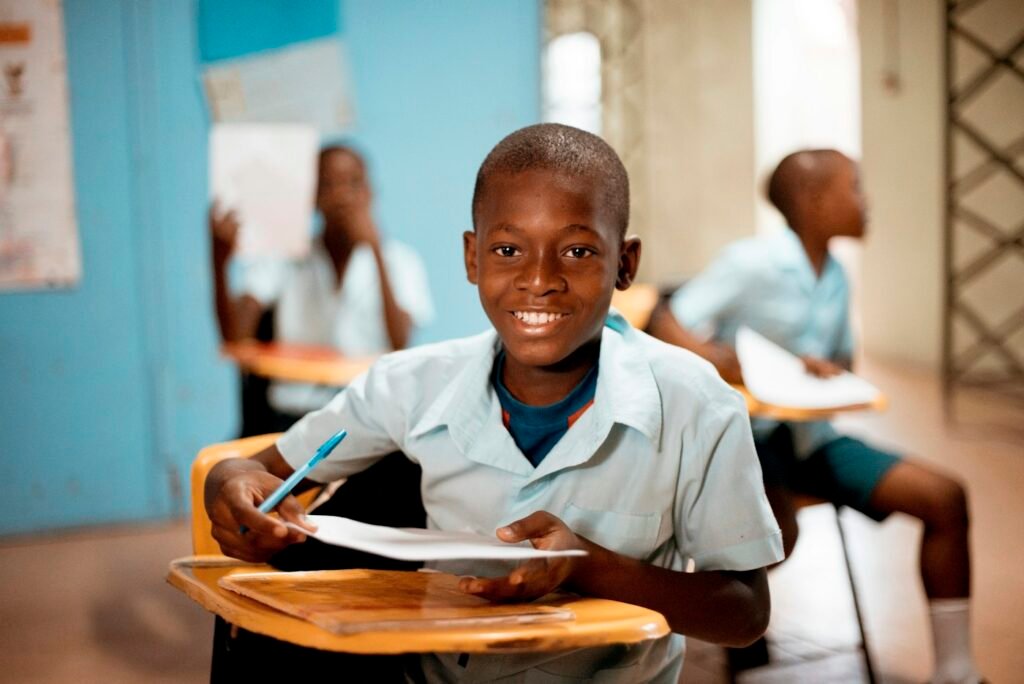
Boy proudly holding up his work

Activities

Pre-writing

  • Tracing lines, shapes and letters.
  • Drawing pictures and practising name recognition.

Reading readiness

  • Story reading.
  • Identifying letters and beginning sounds.
  • Rhyming games.

Mathematics through play

  • Counting from 1 to 20.
  • Sorting objects.
  • Learning basic shapes and patterns.

Simple science

  • Planting seeds.
  • Observing water and floating objects.
  • Learning about animals and weather.

Group activities

  • Sharing games.
  • Cleaning up toys together.
  • Working in small groups.
Pupil in school uniform

Primary school

Primary

After Kindergarten Readiness, children move up into our Primary classes. Here they become fluent readers, confident writers and capable problem-solvers, guided by caring teachers in a Christ-centred classroom.

Key development areas

What children learn

English language arts

  • Reading, phonics and comprehension.
  • Spelling, grammar and creative writing.
  • Speaking and listening with confidence.

Mathematics

  • Number work, addition, subtraction, multiplication and division.
  • Measurement, money, time and shapes.
  • Problem solving and reasoning.

Science

  • Plants, animals and the human body.
  • Health, hygiene and the environment.
  • Simple experiments and observation.

Social studies

  • Family, community and Liberia.
  • Geography, history and citizenship.
  • Respect for people and cultures.

Bible and character

  • Daily devotion, prayer and Bible lessons.
  • Honesty, kindness and responsibility.
  • Serving others in school and at home.

Arts, music and PE

  • Drawing, crafts and drama.
  • Singing and music.
  • Sports, games and physical fitness.

Daily activity areas

A well-rounded day for children aged 3 months to 5 years includes something from every one of these areas.

Language

Songs, stories, conversations, picture books

Physical development

Crawling, dancing, running, ball games

Creative arts

Drawing, painting, music, drama

Early mathematics

Counting, sorting, matching, patterns

Social development

Sharing, group play, role-playing

Discovery and science

Nature walks, water play, planting

Life skills

Handwashing, cleaning up, dressing independently

A sample school day

Children thrive on a predictable rhythm. Here is how a typical morning flows in our early childhood classes (2 to 5 years). Primary pupils follow a full school-day timetable of lessons.

For infants, the day is much more flexible and follows each baby's own feeding, sleeping and care routines.

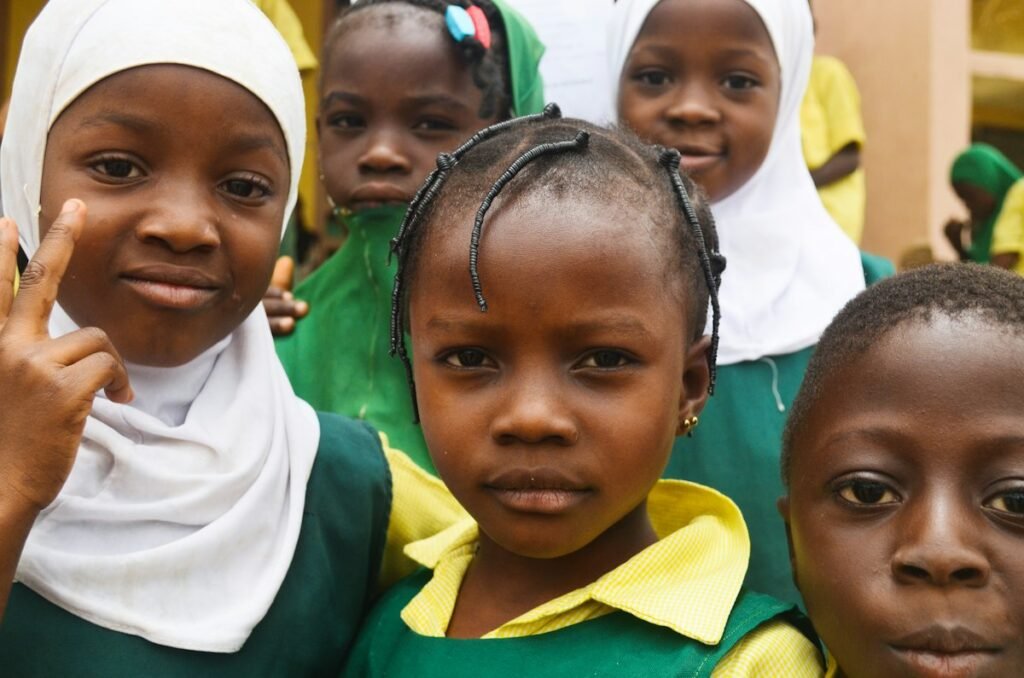
Children smiling together

8:00 to 8:30

Arrival and free play

8:30 to 9:00

Morning songs and circle time

9:00 to 9:30

Learning activity

9:30 to 10:00

Snack and hygiene

10:00 to 10:45

Outdoor or movement play

10:45 to 11:15

Creative activity

11:15 to 11:30

Story and closing activities

Safety comes first

For children under 3 years, every activity is closely supervised, and toys and materials are large enough to prevent choking. All activities are adapted to each child's developmental stage.

Find the right program for your child

Visit us, meet the teachers and see our classrooms. We will help you choose the right age group.